Originating from the French Antilles of Guadeloupe and Martinique you’ll hear this music blasting during at carnival time.
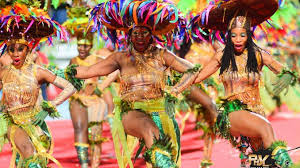
Zouk was originally sung in Creole language. The creole word ‘Zouke’ is from the French verb secouer, which loosely means ‘to party’ and was first used on the islands to refer to nightlong dance parties. Initially, the term ‘miziki zouk’ was used as a collective label for the various types of Caribbean music played at such parties.
Zouk emerged as a music genre in 1979 and is a mixture of diverse styles of Carribean music, which include Compas and cadence from Haiti, beguine from Martinique and Guadeloupe and cadence-lypso, a hybrid of Haitian cadence and Trinidadian calypso.
Kassav, a band from Guadeloupe was the early pioneers of zouk music
Follow me on Instagram on @lailah256 to be the first to find out about new post
Within the French Antillean Creole speaking population, zouk emerged as an emblem of cultural pride owing first and foremost to the music’s use of Creole lyrics. By projecting the unofficial common tongue of the region in a modern and cosmopolitan musical setting, zouk appealed to the ideology of créolité (“creole-ness”), a concurrent literary and cultural movement that strove to recognize the language and culture of the French Antilles as legitimate hybrids, both related to and distinct from their predominantly African and European (particularly French) parent cultures.
Substyles of zouk have since developed, such as ‘zouk love’ with romantic themes and slow tempi, which made its way to Ivory Coast in North Africa.
Moreover, as zouk became more cosmopolitan, lyrics came to be sung in French rather than Creole. In other words, while zouk succeeded in putting the French Antilles on the world music map, it sacrificed some elements of its “creole-ness” for the sake of such global accessibility. Enjoy discovering zouk music!
Kassav
Toofan ft Jacob Desvarieux & Kassav – OU LE:
 Afro-tunes